
In short: a good custom packaging brief does not need technical detail. It needs the product, the quantity, the budget, the deadline, the purpose, the delivery route and any style references, so the right specialist can guide the rest from there.
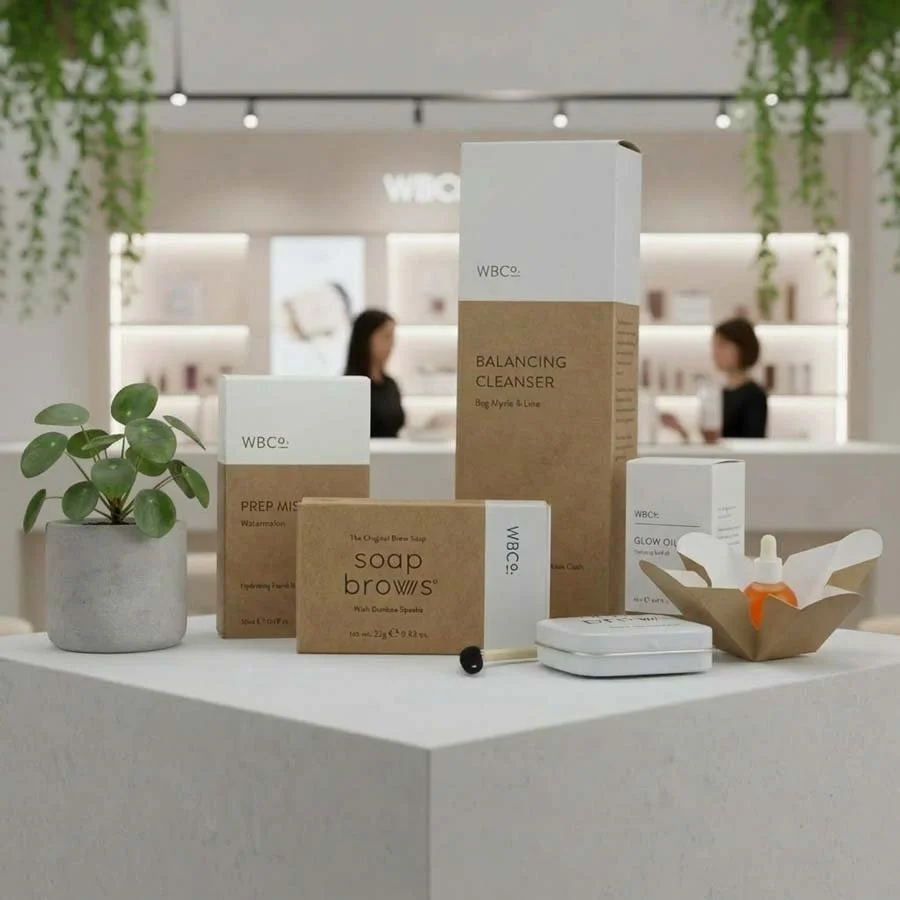
If you have landed here because you want to know how to write a brief for custom packaging, the first thing to understand is this: you do not need to become a packaging expert before speaking to one.
A good packaging brief is not about using the right technical language or trying to specify every material, finish and production method yourself. It is about giving the packaging specialist the right information so they can understand the product, the purpose, the quantity, the budget, the deadline and what the packaging needs to achieve.
Packaging has a lot of moving parts. Structure, materials, print, finishes, fitments, artwork, production, packing, delivery and cost all need to work together. We have been in and around packaging, design, artwork and production for nearly 40 years, and we are still learning something new most weeks. So if you do not know the difference between board grades, laminates, fitments or box constructions, that is not a problem. That is what the right packaging supplier is there to help with.
What is a custom packaging brief?
A custom packaging brief is the starting point for a custom packaging project. It gives the packaging specialist enough context to understand what you are trying to achieve, how the packaging will be used and what kind of route is likely to make sense.
We have had briefs that were three lines long and completely usable, and we have had five-page briefs that told us almost nothing about the actual project. Length is not the measure of a good brief. Usefulness is.
Is it designed to sell on shelf? Is it being posted directly to customers? Is it for a PR launch, influencer campaign, event, presentation, retail display or gift set? Those details matter because each type of packaging has a different job to do, and that's exactly what the next section walks through.
What information should you include in a custom packaging brief?
You do not need to have every answer. You just need enough information to get the conversation started in the right direction. A simple brief should usually include the following:
The product or products
Quantity
Budget
Deadline
Purpose
Delivery route
Fulfilment, assembly and packing
Artwork position
Style references and mood boards
Here is what we actually need to know under each one, and why it matters.
The product or products
What is going inside the packaging? Include the product type, approximate size, weight, number of items and anything unusual we need to know: fragile, heavy, awkwardly shaped, liquid-filled, sharp, delicate, or something that needs to be held in a certain position.
If more than one product is going into the same box, such as a gift set or an e-commerce bundle, the products themselves are worth thinking about before the packaging is. A jar standing 100mm high and 100mm across does not sit naturally next to a 40mm tube, for example. Laid flat together, that is a 60mm gap for the box to work around.
This is easiest to solve early. Bring us in early for structural work before the primary packaging is finalised, and we can often suggest small changes to it that make the products sit together properly. That means a simpler box, built faster, at lower cost, because it is not having to compensate for a mismatch that did not need to exist.
The quantity
How many units are you looking to produce? Quantity matters more than most people expect. Setup costs are roughly the same whether you're producing ten boxes or a thousand, so ten boxes on a £3,000 minimum works out at £300 each, not because the box is expensive, but because the setup isn't shared across many units. It also decides whether a box can be produced by machine or has to be hand-assembled, and that breakpoint shifts depending on the box itself, so early on expect a rough figure rather than an exact one.
If you're only after a small run, for a PR launch, a promo or a marketing sample, it's worth asking what a slightly higher quantity would cost before settling on the smallest number that feels safe. Because the setup cost is fixed either way, going from ten units to fifty is often a small step up in spend for a much better price per unit, and it leaves you with enough to use across more than one sales channel instead of just the one you had in mind.
The budget
What budget are you working to? This could be a total project budget or a target cost per unit.
This is where expectations and reality most often part ways, and it happens more than you'd think. A client will come to us having priced up a rigid box at somewhere around £1.50 a unit, often from an AI tool, and ask for fifty of them. The maths in their head says that's a £75 job. What they haven't factored in is that setup costs roughly the same whether you're producing fifty boxes or ten thousand. Our quotes start from around £2,000 for carton projects, and from around £3,000 for PR or marketing boxes, regardless of whether the quantity is fifty or five hundred. Being upfront about a starting budget early saves everyone a difficult conversation later.
The deadline
When do you need the packaging delivered? Every page on our website says production takes four weeks from sign-off of artwork, but that's only part of the timeline. Before production starts, there's usually a week or two for the CAD design and sampling, plus time for artwork to be created and signed off, a few days if we're doing it, longer if it's coming from you. Realistically, six weeks from a standing start to finished boxes is a more honest number than four.
We had an enquiry last week where the client was vague about budget and timing for a while, then eventually said they needed it "next week." I asked whether that meant a price by next week, or the boxes themselves. They meant the boxes. You can guess how that conversation went. Try not to squeeze the development stage just to hit an internal target: every extra week you can give the project tends to open up better and more achievable options.
The purpose
What does the packaging need to do? Retail packaging designed to compete on shelf needs different things from e-commerce packaging that has to survive the post and create an opening experience, which is different again from packaging built for a PR launch or influencer moment, where the reveal matters more than almost anything else. Packaging can sometimes do more than one job, but it rarely does several jobs equally well, so the clearer you can be about the main one, the easier it is to recommend the right route.
The delivery route
How does the packaging need to be delivered once it has been produced? For larger retail or e-commerce quantities, this may be palletised or packed into outer cartons: pallets work well if you have the equipment to receive them, outer cartons if boxes need to be handballed or stored in smaller batches. For smaller PR or launch projects, delivery may be to one address, split across a few batch addresses, or sent individually to a list of recipients.
Fulfilment, assembly and packing
Who is putting the products into the packaging? For larger projects, this is usually your own warehouse or fulfilment partner. For smaller PR, influencer or launch projects, we can often help directly with assembly, kitting, co-packing and multi-address fulfilment.
The artwork position
Can you supply print-ready artwork? If not, do you have the brand assets, such as logos, fonts, colour references, graphics, imagery, product copy, barcodes or legal information, for the packaging company to help you produce it?
Style references and mood boards
Send examples of packaging you like and packaging you do not like. A few reference images or a simple mood board can do more work than paragraphs of description, because it speeds things up on our end: we can look at a mood board and see straight away what you're trying to achieve, and just as importantly, what's realistic and what isn't.
The best ones tend to be a couple of Pinterest-style boards, one of things you like and one of things you don't, using real, existing packaging rather than anything invented. That last part matters more than it sounds. We increasingly get sent AI-generated visuals of packaging that someone wants costed up, and a lot of the time they simply can't be made, the design doesn't resolve as a hinged box, or a lid and base, or any real construction at all. It looks finished, but it was never actually buildable. A photo of something that already exists in the real world tells us it's producible, because someone has already produced it.
It's also where "premium" stops being just a word. To us, premium usually means a luxury rigid box, quality foil finishes, a considered fitment and a good opening experience. We've had a client say premium and then send over a photo of a pizza box. We've had another send a reference image of an actual small suitcase, complete with wheels, handles and a zip around the edge, and ask for their packaging to look like that. A mood board doesn't need to be polished, but it does need to show what you're actually picturing, because the gap between what people say and what they mean can be bigger than you'd think.
How to use AI to help with a custom packaging brief
Over the last couple of years, AI has made it much easier for people to turn a rough idea into something that looks detailed and professional, but that doesn't always make the brief more useful. Used well, AI can help organise your thoughts, tidy rough notes or pull together a clearer starting point. The problem starts when it's used to generate the full technical specification, which is where briefs can become over-complicated, over-specified and disconnected from the real product, budget, quantity, deadline and production route.
If you use AI to help write your brief, one useful final question to ask it is:
"Which parts of this brief are facts I have supplied, which parts are assumptions you have made, and which technical details need checking by a packaging specialist before I ask for prices?"
That question helps separate useful information from AI-generated assumptions. A good brief should give direction, but it should leave the final construction, materials, finishes and production method to be checked by someone who understands how packaging actually behaves in the real world.
Who you send your packaging brief to matters
Not every packaging company looks at a project the same way, because most are set up around one part of the process, not the whole of it, a bit like calling round for building quotes. Ask an electrician and they'll find electrical work. Ask a plumber and it's suddenly the pipes. Neither is wrong exactly, they're just answering through the lens of what they do.
The real cost is time, and time is usually the one thing you don't have spare. Send a brief to the wrong mix of companies and some won't reply at all, because it was never really their kind of job. Others come back a week or two later with advice shaped by what they make rather than what you actually need. We regularly hear from people wanting a project finished in two, three or four weeks, with nothing designed yet, because the company they first approached couldn't deliver, and by the time it reaches us, there often isn't enough runway left to do it properly either.
It's worth being selective from the start. Two or three well-chosen companies, properly suited to the job, will get you further than ten sent out on the off-chance. Every extra company on the list is another chance the brief lands somewhere it was never going to fit.
Why packaging quotes are not always easy to compare
Once the quotes come back, it can feel like the hard part is done, but this is often where a project actually gets more complicated. Two quotes can look like they're for the same job while resting on completely different assumptions, partly because every company quotes differently. Some lay out a detailed breakdown, others give a single overarching figure for the whole job, ours included, because that's how our system is built, not because we're hiding anything. Neither approach is wrong, but it means the quote alone doesn't always tell you what's actually included.
Here's an example of something that can make a real difference. We quote using a high quality carton board: good whiteness both coated and uncoated, printable both sides, with long fibres that give it real strength. Most printers, we'd say the majority, won't quote on that board at all. They'll quote on something cheaper, sometimes half the price, and it'll still be called "carton board" on the page. Two quotes, same words, different material entirely.
It isn't always about the material, either. Ask two companies for "a carton" and one might send back a standard tuck-in box, while another adds a neck fitment, a small square insert at the top that the lid folds over, holding the product in place and stiffening the whole carton in the process. It barely changes the price, but it changes how the finished product feels in someone's hands, and only one company thought to include it. Sometimes what's missing isn't a choice at all: a crash lock base needs a multipoint gluer and someone who genuinely knows how to run it, so rather than say they can't do it, a company will often just leave it off the quote as if it was never needed.
Multiply that by everything else that can quietly differ: foiling included or left off, a colour specified as a Pantone versus mixed as CMYK, and it becomes clear why quotes rarely compare like for like unless every detail has been specified and matched across the board.
Final thoughts
A good custom packaging brief doesn't need to be perfect, and it isn't the final answer, it's a useful enough starting point to get the right conversation going. The strongest briefs come from clients who are clear about what they know, honest about what they don't, and open to the advice that follows, because that's what keeps a project on the right route rather than the most expensive one. Everyone wants "premium" these days, but not every product needs it, and not every budget can carry it: chasing a level your market doesn't need just eats into margin for no extra sales.
That's really the whole point of a brief: give us the real picture, not a finished technical spec, and let the conversation do the rest. Once the basics are clear, the right packaging route becomes a lot easier to find.
